Black friday 75% Off:
How to Dump Plastic Bags Without Dumping on the Planet
Are Eco-Friendly Products Really Better? Myths Vs Facts Explained
Many people are confused about eco friendly products. Some believe they are expensive or less effective. Others think they are just a marketing trend. With growing awareness of climate change, understanding eco friendly products benefits has become important.
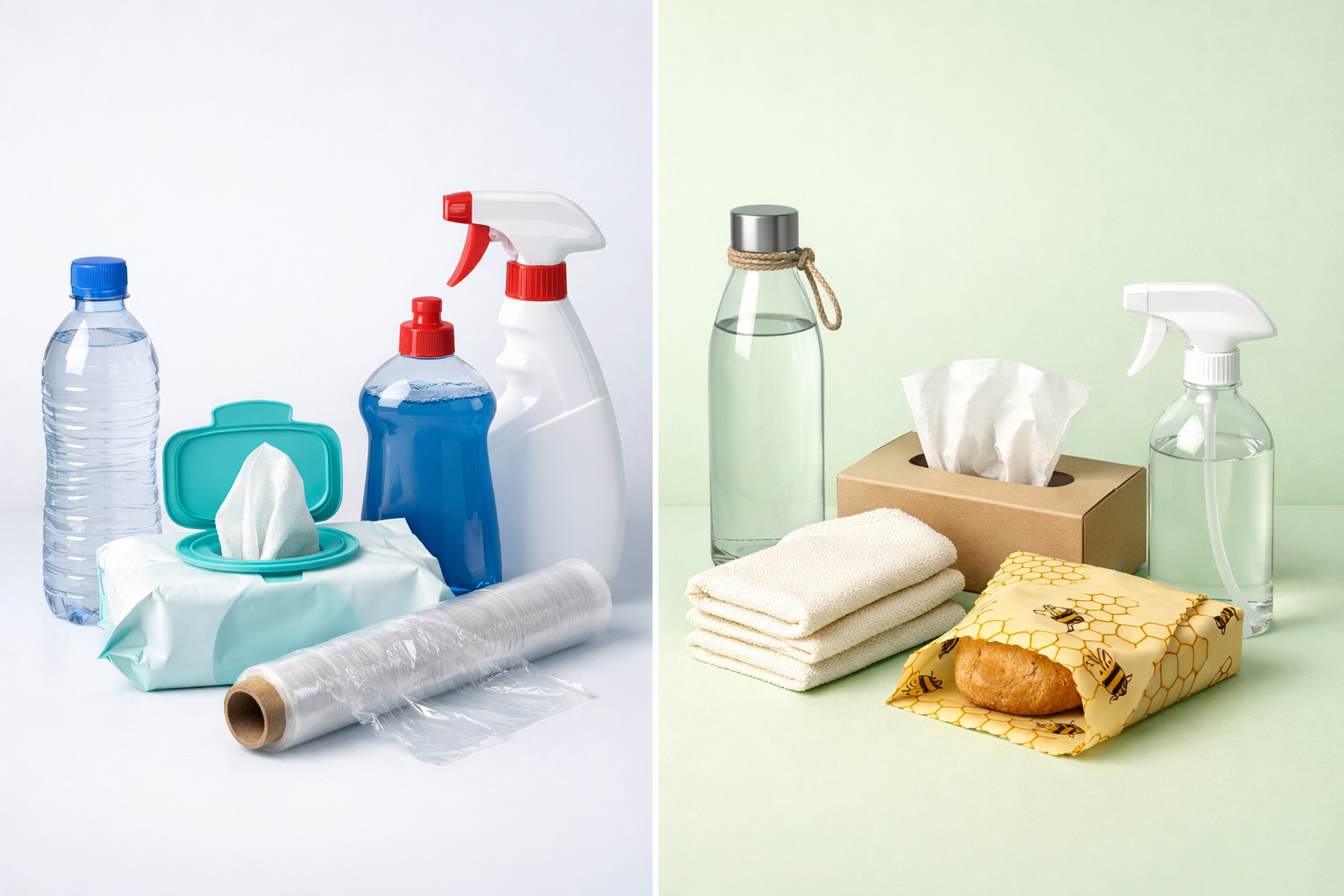
Let’s break down common eco friendly products myths and compare facts clearly.
Why This Debate Matters
Homes generate large amounts of waste. The type of products we choose affects pollution, health, and expenses. Comparing eco friendly vs regular products helps families make smarter decisions.
Studies show:
- Household waste is a major pollution source
- Plastic use continues to rise globally
- Consumers are shifting toward sustainable products
But are they truly better? Let’s examine the facts.
Myth 1: Eco-Friendly Products Are Always Expensive
This is one of the biggest eco friendly products myths. Many eco options seem costly at first glance.
Fact:
- Reusable items last longer
- Fewer replacements save money
- Bulk and refill options reduce cost
- Lower energy use cuts utility bills
In the long run, eco friendly products benefits include cost savings.
Myth 2: Green Products Do Not Work As Well
Some people believe green products are weaker or less effective.
Fact:
- Many sustainable cleaners work just as well
- Bamboo kitchen towels absorb efficiently
- Compostable garbage bags are durable
- Reusable cloths clean better than wipes
Performance depends on quality, not just material.

Myth 3: One Person’s Choices Do Not Matter
People often feel their impact is too small. This reduces motivation for change.
Fact:
- Millions of small actions create large change
- Reduced waste lowers landfill pressure
- Energy-saving habits reduce emissions
- Demand shifts push industries toward sustainable products
Every purchase influences production patterns.
Myth 4: Eco-Friendly Means 100% Perfect
Some expect eco items to have zero environmental impact. When they find small trade-offs, they dismiss them.
Fact:
- No product is completely impact-free
- Sustainable products reduce harm, not eliminate it
- Choosing better options is progress
- Improvement matters more than perfection
The goal is better choices, not flawless ones.
Myth 5: Regular Products Are Just As Safe
Many assume traditional products are harmless. However, some regular items contain chemicals and plastics.
Fact:
- Some cleaners release harsh fumes
- Plastic products may contain additives
- Single-use items increase landfill waste
- Eco-friendly alternatives reduce chemical exposure
Comparing eco friendly vs regular products shows clear health differences.